
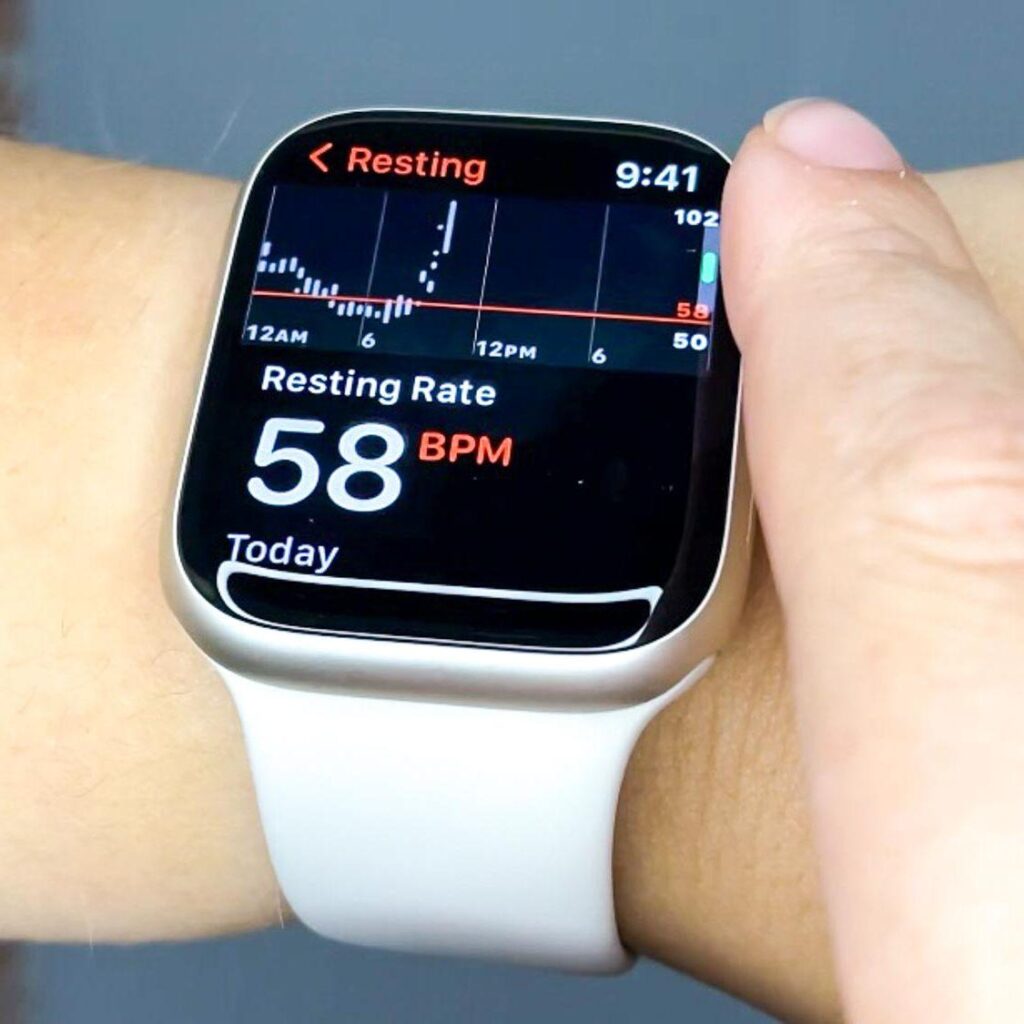
Free Target Heart Rate Calculator UK – Find Your Exercise Heart Rate Zones
Want to know what your heart rate might be during walking, cycling, jogging or other exercise?
Our free Target Heart Rate Calculator helps you estimate your exercise heart rate zones based on your age, with an optional calculation using your resting heart rate.
Target heart rate is usually expressed in beats per minute (bpm). It can provide a general guide to exercise intensity, although your actual heart rate response will vary.
Use our calculator to:
- Estimate your maximum heart rate based on age.
- Calculate moderate-intensity exercise heart rate zones.
- Calculate vigorous-intensity exercise heart rate zones.
- Use the Heart Rate Reserve (Karvonen) method.
- View your results in beats per minute.
- Print your estimated exercise heart rate zones.
Go To Calculator
This calculator is intended for adults aged 18 and over. It provides general exercise information and does not replace medical advice.
Target Heart Rate Calculator
Estimate your exercise heart rate zones in beats per minute.
Your Estimated Heart Rate Zones
How these zones were calculated
About Target Heart Rate
Age-based maximum heart rate is only an estimate. Your actual maximum can be substantially different. The Karvonen method includes your resting heart rate, but still relies on an estimated maximum.
Heart-rate zones may be unreliable for people taking beta blockers or certain other medicines. Exercise should also be guided by how you feel, your fitness, and any advice from your healthcare team.
What Is Target Heart Rate?
Target heart rate refers to an estimated range of heartbeats per minute associated with a particular exercise intensity.
Your heart normally beats faster during physical activity because your muscles need more oxygen.
Monitoring your heart rate can help you understand how hard your body is working during exercise.
For example, brisk walking may produce a moderate exercise intensity for one person, while the same activity may feel easier or harder for someone else.
Target heart rate zones are therefore useful guides rather than precise rules.
How to Use Our Target Heart Rate Calculator
Our calculator offers two methods.
Method 1: Standard Age-Based Calculation
This is the simplest option to use our target heart rate calculator.
Enter your age.
Select the standard age-based method.
Click Calculate My Heart Rate Zones.
View your predicted maximum heart rate and estimated moderate and vigorous exercise ranges.
The calculation uses the commonly recognised formula of 220 minus your age.
Method 2: Heart Rate Reserve (Karvonen)
This method also considers your resting heart rate.
Enter your age.
Select Heart Rate Reserve (Karvonen).
Enter your resting heart rate in beats per minute.
Calculate your estimated exercise zones.
This method incorporates an additional measurement, but it still relies on an estimated maximum heart rate.
How Is Maximum Heart Rate Calculated?
A widely used method for estimating maximum heart rate is:
Maximum Heart Rate = 220 − Age
For example, a 40-year-old has an estimated maximum heart rate of:
220 − 40 = 180 bpm
This is a population-based prediction. Your actual maximum heart rate could be higher or lower.
A predicted maximum should not be treated as a safe upper limit, an exercise goal or a diagnosis.
Target Heart Rate Chart by Age
The following table shows estimated heart rate zones using the standard age-based method.
| Age | Predicted Maximum | Moderate (50–70%) | Vigorous (70–85%) |
|---|---|---|---|
| 20 | 200 bpm | 100–140 bpm | 140–170 bpm |
| 30 | 190 bpm | 95–133 bpm | 133–162 bpm |
| 40 | 180 bpm | 90–126 bpm | 126–153 bpm |
| 50 | 170 bpm | 85–119 bpm | 119–145 bpm |
| 60 | 160 bpm | 80–112 bpm | 112–136 bpm |
| 70 | 150 bpm | 75–105 bpm | 105–128 bpm |
| 80 | 140 bpm | 70–98 bpm | 98–119 bpm |
All figures are estimates rounded to whole beats per minute.
What Is a Good Heart Rate for Exercise?
There is no single exercise heart rate that is suitable for everyone.
Age, fitness, medication, medical conditions and the type of activity can all influence your heart rate.
The standard age-based method uses these approximate intensity bands:
Moderate intensity: 50–70% of predicted maximum heart rate.
Vigorous intensity: 70–85% of predicted maximum heart rate.
These ranges are commonly used in exercise guidance, but they should be interpreted alongside your perceived effort and individual circumstances.
What Is the Karvonen Formula?
The Karvonen formula calculates target heart rate using Heart Rate Reserve (HRR).
Heart Rate Reserve is the difference between your predicted maximum heart rate and your resting heart rate.
The formula is:
Heart Rate Reserve = Maximum Heart Rate − Resting Heart Rate
Your target heart rate is then estimated using:
Target Heart Rate = Resting Heart Rate + (Heart Rate Reserve × Intensity)
Our target heart rate calculator uses 40–59% of heart rate reserve for moderate intensity and 60–84% for vigorous intensity.
These are percentages of heart rate reserve, not percentages of maximum heart rate.
Karvonen Calculation Example
Suppose someone is 40 years old and has a resting heart rate of 65 bpm.
Predicted maximum heart rate:
220 − 40 = 180 bpm
Heart rate reserve:
180 − 65 = 115 bpm
At 40% heart rate reserve:
65 + (115 × 0.40) = 111 bpm
At 59% heart rate reserve:
65 + (115 × 0.59) = approximately 133 bpm
The estimated moderate-intensity range is therefore 111–133 bpm.
How to Measure Your Resting Heart Rate
Your resting heart rate is the number of times your heart beats per minute when you are relaxed and not exercising.
To measure it:
Sit or lie quietly and relax.
Place your index and middle fingers against the pulse on the inside of your wrist.
Count the beats for 60 seconds.
Record the result in beats per minute.
Measuring in the morning before getting out of bed may help you obtain a consistent resting reading.
Your resting heart rate can change with illness, stress, sleep, hydration, medication and fitness..
What Is the Difference Between Moderate and Vigorous Exercise?
Moderate exercise makes you breathe faster and raises your heart rate, but you can generally still hold a conversation.
Examples may include brisk walking, steady cycling and some forms of dancing.
Vigorous exercise requires more effort. Your breathing becomes faster, and speaking in full sentences may be difficult.
Examples may include running, faster cycling and more demanding aerobic activities.
The same activity can represent different intensity levels for different people.
What Is the Talk Test?
The talk test is a simple way to estimate exercise intensity without relying entirely on a heart rate monitor.
During moderate exercise, you can generally talk but not sing comfortably.
During vigorous exercise, you may struggle to say more than a few words without pausing for breath.
The talk test can be particularly useful when predicted heart rate zones do not match how hard exercise feels.
What Should My Heart Rate Be When Walking?
Walking heart rate varies depending on your age, fitness, walking speed, terrain and health.
A gentle walk may be light intensity, while brisk walking uphill may be moderate or vigorous for some people.
Instead of aiming for a single number, consider how your breathing and perceived effort change.
You can use our Target Heart Rate Calculator as a general reference, but it cannot determine the correct walking pace for your individual health circumstances.
What Should My Heart Rate Be When Running?
Running often produces a higher heart rate than walking, but the exact figure varies considerably.
An experienced runner may maintain a different heart rate from someone who has recently started exercising.
Predicted heart rate zones can help describe relative intensity, but they are not a substitute for an individual exercise assessment.
If you are new to running, increase your activity gradually rather than attempting to reach a particular heart rate.
Do Beta Blockers Affect Target Heart Rate?
Yes. Beta blockers can slow the heart rate and change the normal heart rate response to exercise.
Other medicines and medical conditions can also affect heart rate.
If you take beta blockers, have an irregular heartbeat, have a heart condition or are following a cardiac rehabilitation programme, do not rely on a standard online calculator to set your exercise limits.
Ask your healthcare professional for individual guidance.
Frequently Asked Questions
What is my target heart rate at age 40?
Using the standard age-based formula, a 40-year-old has a predicted maximum heart rate of 180 bpm. The estimated moderate range is 90–126 bpm, while the vigorous range is 126–153 bpm.
What is my target heart rate at age 50?
For a 50-year-old, the predicted maximum is 170 bpm. The estimated moderate range is 85–119 bpm and the vigorous range is approximately 119–145 bpm.
What is my target heart rate at age 60?
For a 60-year-old, the predicted maximum is 160 bpm. The estimated moderate range is 80–112 bpm, while the vigorous range is 112–136 bpm.
How accurate is the 220 minus age formula?
It provides a general population-based estimate. Individual maximum heart rates can differ substantially from the predicted figure.
Is the Karvonen method more accurate?
The Karvonen method incorporates resting heart rate and can provide additional context for exercise intensity. However, it still depends on the accuracy of the estimated maximum heart rate.
What does bpm mean?
Bpm stands for beats per minute. It is the number of times your heart beats in one minute.
Can I use this target heart rate calculator if I have a heart condition?
You should obtain individual exercise guidance from your healthcare professional. Generic target heart rate calculations may not be appropriate for your circumstances.
Can I use this target heart rate calculator for children?
No. This calculator is intended for adults aged 18 and over.
Is the Target Heart Rate Calculator free?
Yes. Calculator Central’s Target Heart Rate Calculator is free to use without registration.
Is Maximum Heart Rate the Same as Target Heart Rate?
No.
Maximum heart rate is an estimate of the highest heart rate you might reach during very intense exercise.
Target heart rate refers to a range associated with a particular level of exercise intensity.
You do not need to exercise at your maximum heart rate to benefit from physical activity
More Free Health Calculators
Calculator Central provides additional tools to help you explore health and fitness measurements.
BMI Calculator: Calculate Body Mass Index using height and weight.
Waist-to-Height Ratio Calculator: Compare waist circumference with height.
Walking Calories Calculator: Estimate calories burned while walking.
Daily Water Intake Calculator: Explore general hydration guidance.
Calculate Your Exercise Heart Rate Zones
Our free Target Heart Rate Calculator UK makes it easy to estimate your moderate and vigorous exercise zones.
Enter your age, choose a calculation method and view your estimated results in beats per minute.
Remember that exercise heart rate zones are general estimates. Your symptoms, perceived effort, medical circumstances and professional advice matter more than reaching a particular number.
Medical Disclaimer
This calculator is for general educational purposes only. It does not diagnose medical conditions, determine whether exercise is safe or prescribe exercise intensity.
If you have a heart or circulatory condition, take medication affecting heart rate or are returning to exercise after illness, consult an appropriate healthcare professional.
Stop exercising if you develop chest pain, severe breathlessness, faintness or other concerning symptoms, and seek appropriate medical help.